If you find yourself in Boston often, booking another hotel can start to feel more like a workaround than a solution. You may want a place that feels settled, private, and ready when you are, especially if your visits revolve around work, regular city commitments, or weekends you plan well in advance. A Downtown Boston pied-à-terre can offer exactly that, but it is not the right fit for every buyer. Here’s how to think through the lifestyle, costs, and tradeoffs before you make a move.
Why Downtown Boston appeals
Downtown Boston sits at the center of the city’s business, civic, and cultural life. The City of Boston describes it as home to City Hall, major corporate headquarters, condos and apartments, and major attractions, with housing that ranges from historic apartment buildings to modern glass towers.
That mix matters if you are considering a pied-à-terre. In practical terms, Downtown offers the kind of convenience that makes ownership easier to justify if you are in the city regularly. You are close to transit, dining, theaters, waterfront access, Boston Common, the Greenway, and the kind of daily services that support a lock-and-leave lifestyle.
The area is also evolving. Boston’s recent Downtown zoning changes are intended to support more housing, adaptive reuse, and office-to-residential conversion, which points to a neighborhood that should remain condo-heavy and increasingly mixed-use over time.
Who a pied-à-terre fits best
A pied-à-terre usually makes the most sense when Boston is already part of your routine. If you are in the city once or twice a year, a hotel may still be the simpler answer. If you are here often, ownership can start to feel more practical.
In Downtown Boston, the best fit often includes buyers such as:
- Suburban professionals with recurring city obligations
- Frequent business travelers who want a consistent home base
- Out-of-state buyers with regular ties to Boston
- Households that want convenience, privacy, and storage between visits
The key is repeat use. A pied-à-terre is strongest as a lifestyle purchase for someone who values familiarity, efficiency, and the ability to arrive without starting from scratch each time.
What properties look like Downtown
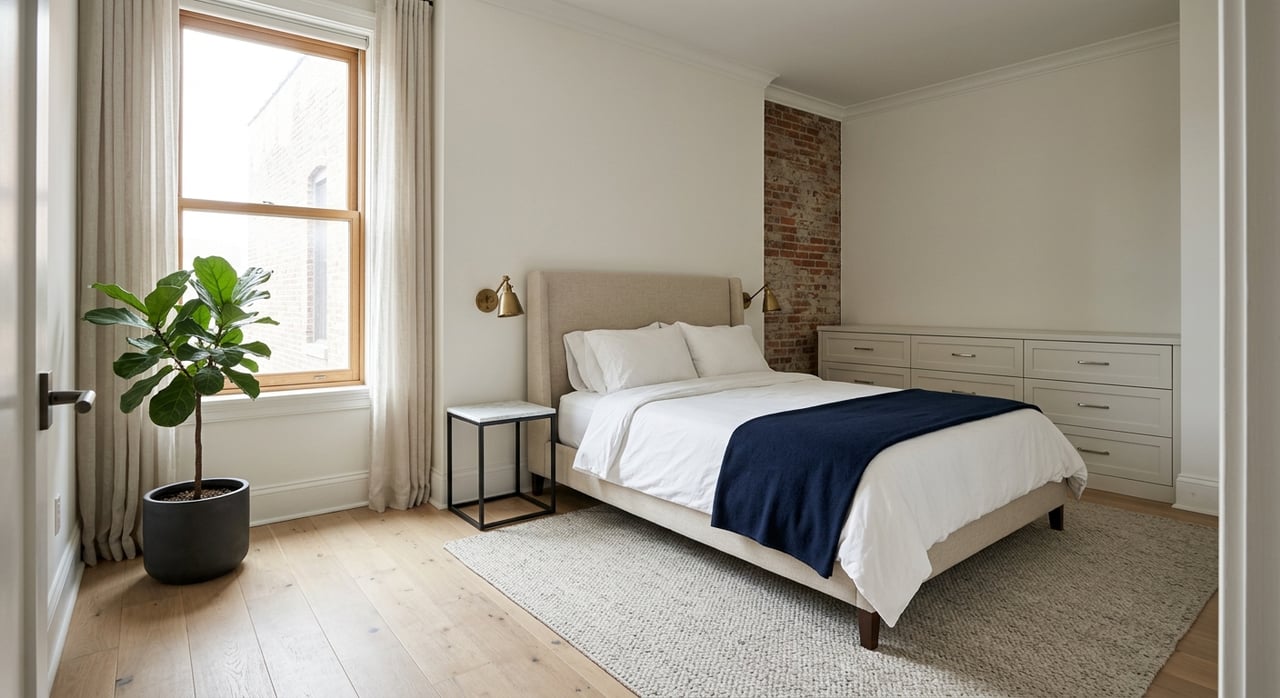
Downtown Boston is generally a condo-first market. Based on the city’s neighborhood and planning materials, the typical options are smaller, lower-maintenance urban homes in towers or converted buildings rather than detached single-family houses.
That can work well for a second-home buyer. A compact, well-located condo often gives you exactly what you need for city stays: security, less upkeep, and easy access to the rest of Boston.
For many buyers, the appeal is not square footage. It is simplicity. You are trading yard work and extra rooms for location, convenience, and a home that can be ready whenever you need it.
The biggest question: lifestyle or investment?
This is where many buyers need clarity. A Downtown Boston pied-à-terre is usually more compelling as a personal-use property than as an income strategy.
If your main goal is to have a private base in the city, the case can be strong. If your plan depends on offsetting ownership costs with frequent short-term rentals, Boston’s rules can make that much harder.
That distinction matters early in your search because it affects not only your budget, but also which buildings and ownership structures are worth your time.
What ownership really costs
The purchase price is only part of the picture. In Downtown Boston, carrying costs can be meaningful, especially if you are buying a condo in a full-service or amenity-rich building.
Boston’s FY26 residential tax rate is $12.40 per $1,000 of assessed value. On a $1 million condo, that works out to about $12,400 per year before any exemption.
Boston also offers a residential exemption that can reduce a tax bill by up to $4,353.74, but only if the owner lives in the property as a primary residence and only for one property. A true pied-à-terre used as a second home generally would not qualify, so buyers should not assume that savings will apply.
Condo dues are another major factor. A recent Boston Globe summary of Redfin data reported a Boston-wide median condo fee of $414 per month, while newer luxury buildings can exceed $1,000 per month. That figure is not specific to Downtown, but it is a useful benchmark when you are comparing options.
Why monthly costs deserve a close look
Condo fees can change how a property feels on paper. A lower purchase price may not be the better value if the building has higher ongoing dues, while a more expensive home with lower monthly costs may be easier to carry over time.
This is especially important for a pied-à-terre because you may not be using the home every day. You want the convenience of ownership, but you also want a clear understanding of what you are paying for when the property is sitting empty between visits.
A careful review of taxes, condo dues, and building services can help you decide whether the lifestyle gain matches the ongoing expense.
Can you rent it out when you are away?
In Boston, you should be careful with assumptions here. The city’s short-term rental rules are narrow, and many second-home buyers will find that nightly rental income is not a realistic plan.
Boston allows rentals of fewer than 28 consecutive days only in owner-occupied condominiums, owner-occupied single-family homes, and certain owner-occupied two- and three-family properties. The city also states that limited-share and home-share units must be the owner-operator’s primary residence for at least nine months out of a 12-month period.
For a typical pied-à-terre that is not your primary residence, that creates a real limitation. In most cases, a second-home condo will not qualify for Boston’s short-term rental program.
There are also operational requirements. Boston requires annual renewal, a business certificate, an active registration number on the listing, and contact information for a local person who can respond in person within two hours.
On top of city rules, condo associations may have their own restrictions. Even if a use might fit within municipal rules, the building itself may still prohibit short-term rentals.
What about longer stays?
There is a more workable middle ground for some owners. Boston states that rentals of 28 consecutive days or longer are not considered short-term rentals.
That means a Downtown pied-à-terre may be more plausible as a furnished mid-term base than as a nightly rental property. If your goal is occasional flexibility rather than hotel-style turnover, that distinction may be useful.
Boston also notes that furnished institutional or business stays of at least 10 days can fall outside the short-term rental definition if they are properly contracted. For many buyers, though, the broader takeaway is simple: buy this type of property because you want to use it, not because you are counting on frequent nightly income.
If you do rent short term, taxes add up
If a unit is legally rented as a short-term rental, the tax load is significant. Massachusetts charges a 5.7% state room-occupancy excise, Boston adds a 6.5% local room-occupancy excise, and Boston-area stays also face a 2.75% convention-center financing fee.
Combined, that is 14.95% before platform fees and any other applicable charges. That is another reason a second-home buyer should be cautious about treating a Downtown pied-à-terre like a simple cash-flow play.
Massachusetts also requires specific insurance coverage for short-term rental properties. If rental use is part of your plan, that should be reviewed early with the appropriate professionals.
Pied-à-terre or hotel?
For many buyers, this is the real comparison. Downtown Boston already has numerous hotels serving business travelers and visitors, so ownership has to offer something more than occasional convenience.
A pied-à-terre tends to win when you want consistency. You have your own kitchen, your own storage, your own furnishings, and a home base that feels familiar every time you arrive.
A hotel tends to win when your visits are infrequent or unpredictable. You keep flexibility, avoid carrying costs, and do not need to think about taxes, condo fees, or building rules.
The right answer usually comes down to frequency and preference. If Boston is part of your life on a regular basis, ownership can feel more seamless. If it is only an occasional destination, a hotel may remain the smarter choice.
Questions to ask before you buy
Before you move forward, it helps to pressure-test the decision with a few practical questions:
- How often will you realistically stay in Boston each year?
- Do you want a personal home base, or do you need income to justify the purchase?
- Are you comfortable carrying taxes and condo dues without relying on short-term rental revenue?
- Does the building’s governance fit how you plan to use the property?
- Would a hotel still be simpler for the way you travel today?
If your answers point toward repeat use, convenience, and long-term enjoyment, a Downtown Boston pied-à-terre can be a very smart lifestyle purchase. If they point toward infrequent visits and hoped-for rental income, the fit may be weaker.
The Downtown Boston bottom line
A Downtown Boston pied-à-terre is usually best for buyers with real, repeated ties to the city. It offers convenience, walkability, and a low-maintenance ownership style in one of Boston’s most connected neighborhoods.
At the same time, it is important to go in with clear expectations. A second-home condo generally will not qualify for Boston’s residential tax exemption, condo dues can materially affect monthly costs, and the city’s short-term rental rules sharply limit nightly rental flexibility.
For the right buyer, none of that is a dealbreaker. It simply means the value is mostly in lifestyle, access, and ease, not in turning the property into a casual income asset.
If you are weighing whether a Downtown Boston pied-à-terre fits your goals, working with a team that understands Boston’s core neighborhoods, building-by-building nuances, and discreet buying opportunities can make the decision much clearer. To start a private conversation, connect with The Robinette Team.
FAQs
Is a Downtown Boston pied-à-terre usually a condo?
- Yes. Downtown Boston housing is generally condo-first, with inventory that includes historic apartment buildings, converted properties, and modern glass towers rather than detached single-family homes.
Does a Downtown Boston pied-à-terre qualify for the residential tax exemption?
- Usually no. Boston’s residential exemption is generally limited to a property that you live in as your primary residence, and a true pied-à-terre is typically considered a second home.
Can you use a Downtown Boston second home as a short-term rental?
- In many cases, no. Boston allows short-term rentals under narrow owner-occupied rules, and a second-home condo that is not your primary residence generally will not qualify.
Are condo fees important when buying a Downtown Boston pied-à-terre?
- Yes. Condo dues can materially affect your monthly carrying costs, especially in amenity-rich or newer luxury buildings.
Is a Downtown Boston pied-à-terre better than staying in a hotel?
- It depends on how often you are in the city. If you visit regularly and want privacy, storage, and a consistent home base, ownership may make sense. If your visits are occasional, a hotel may be more practical.
Can a Downtown Boston pied-à-terre work for longer furnished stays?
- Potentially, yes. Boston states that rentals of 28 consecutive days or longer are not considered short-term rentals, which can make longer furnished stays more feasible than nightly rentals.