Open two South End listings side by side and the price tags barely look like the same neighborhood. A two-bedroom at Sepia, the glass-and-brick condo building at Ink Block, lists near $1,650 a square foot. A parlor-level unit in a converted brownstone a short walk away on Union Park lists closer to $1,100 a square foot. Both addresses say South End. Only one of those numbers is the one most buyers picture when they hear the neighborhood's name.
Neither is wrong. That is the problem. The commonly quoted gap between South End and Back Bay pricing, often cited as a few hundred dollars a square foot in the neighborhood's favor, is really a gap between two different kinds of housing stock that happen to share a zip code. Once you separate them, the picture that emerges is not "South End is cheaper than Back Bay." It is closer to "new construction costs roughly the same wherever you build it, and the discount only shows up if you're willing to buy something old."
The Number That Isn't One Number
Ask three sources for South End's median price per square foot in 2026 and you'll get three answers, and all three are defensible. Blended figures covering the three months ending May 2026 put the neighborhood's median sale price around $1.3 million with a per-square-foot figure near $1,220, up about 9 percent year over year. A separate market snapshot published in late July 2026 by New England Condominium described a South End median sale price just over $1 million with per-square-foot pricing between $1,112 and $1,200.
Both are accurate. They're just measuring different mixes of inventory. The blended number includes everything that closed, from a studio in a 1900s rowhouse conversion to a full-amenity unit at a newer building. The moment you isolate the newer, full-service stock, the number moves. Buildings like Sepia and Siena at Ink Block, The Quinn, Atelier 505, and 100 Shawmut routinely trade in the $1,200 to $1,700 a square foot range for their top units, a band that swallows Back Bay's own blended median whole.
Here is the same data side by side, using figures covering the three months ending May 2026, the most recent comparable window for both neighborhoods:
| Metric | Back Bay | South End (blended) | South End (new full-service) |
|---|---|---|---|
| Median sale price | ~$1.5M | ~$1.3M | Varies by building |
| Median $/sq ft | ~$1,350 | ~$1,220 | ~$1,200–$1,700 |
| Days on market | 35, down from 41 a year earlier | 23, up from 22 a year earlier | Often faster when priced to recent resales |
The Back Bay column looks like a premium address, and it is. But at $1,350 a square foot, Back Bay's own blended median sits comfortably inside the range that Sepia, Siena, and the other Ink Block buildings already command. The real gap isn't between the two neighborhoods. It's between old buildings and new ones, in either zip code.
What Back Bay's Scarcity Is Actually Pricing In
Back Bay's number isn't inflated by luxury outliers the way South End's occasional brownstone sale can be. It's a small, essentially built-out footprint bounded by the Charles River, the Public Garden, and Massachusetts Avenue, with no meaningful path to add new supply.
That scarcity shows up less in the median than in how quickly the right unit moves. In the three months ending May 2026, the typical Back Bay home sold in 35 days, down from 41 days over the same stretch a year earlier. Turnkey, amenity-rich units with parking or direct elevator access are the ones driving that improvement, while dated inventory still lingers. The price per square foot in Back Bay isn't really paying for finishes. It's paying for the fact that there is almost no way to build more of it.
The Union Park Problem
If Back Bay's number is explained by scarcity, South End's blended number is complicated by something else entirely: one street that behaves like its own market.
Union Park is a private, gated oval lined by 46 rowhouses, modeled in the 1800s after the same English residential square tradition that produced Louisburg Square on Beacon Hill. Only the even-numbered side has garages, which alone changes what a given address is worth. In 2023, No. 24 Union Park sold for $12.1 million in a private, off-market transaction, a record for the neighborhood at the time. Two years later, in May 2025, 39 Union Park closed for $10.2 million, setting a new benchmark specifically for on-market sales, the buyers reportedly drawn as much to the private park frontage and included garage space as to the house itself.
Neither sale is a typical comp, and no one shopping a $1.3 million condo should expect Union Park pricing to apply to them. But both sales illustrate why South End medians can swing so much from month to month. A handful of trophy single-family conversions on a handful of blocks can move a monthly average in a way that has nothing to do with the broader condo market three streets over.
Where the Discount Survives
None of this means the South End discount is fake. It means it's conditional.
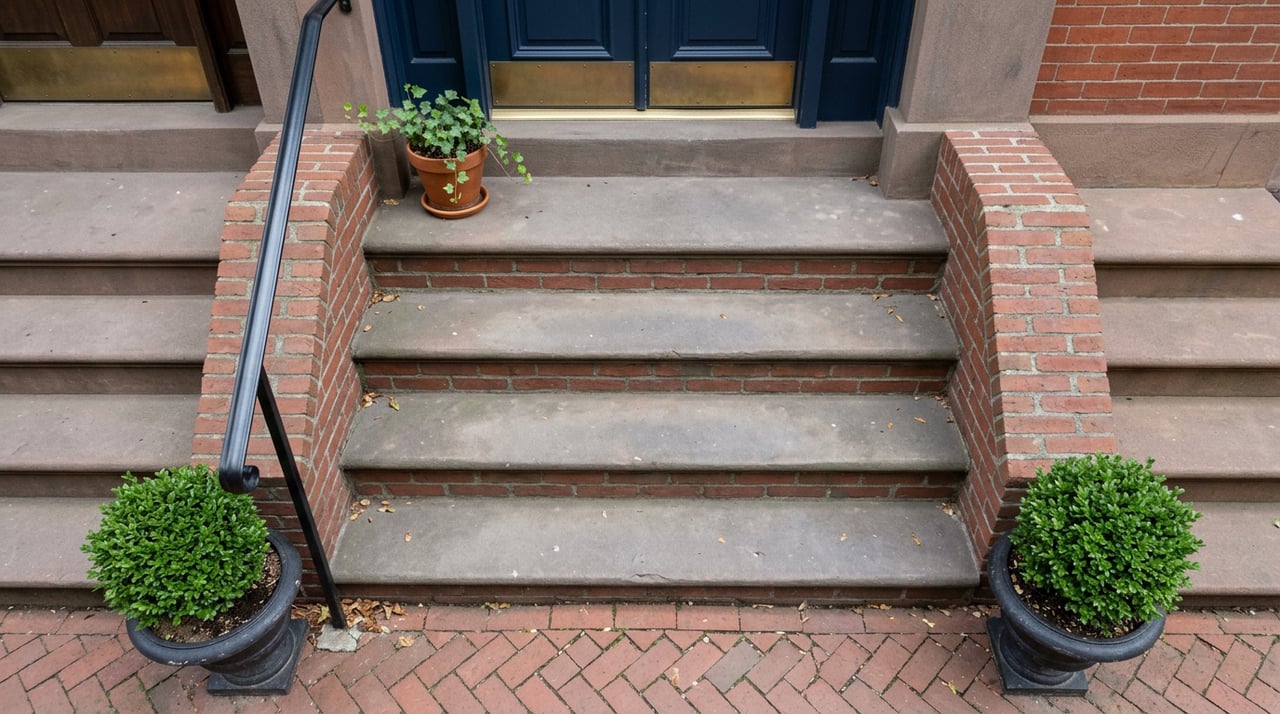
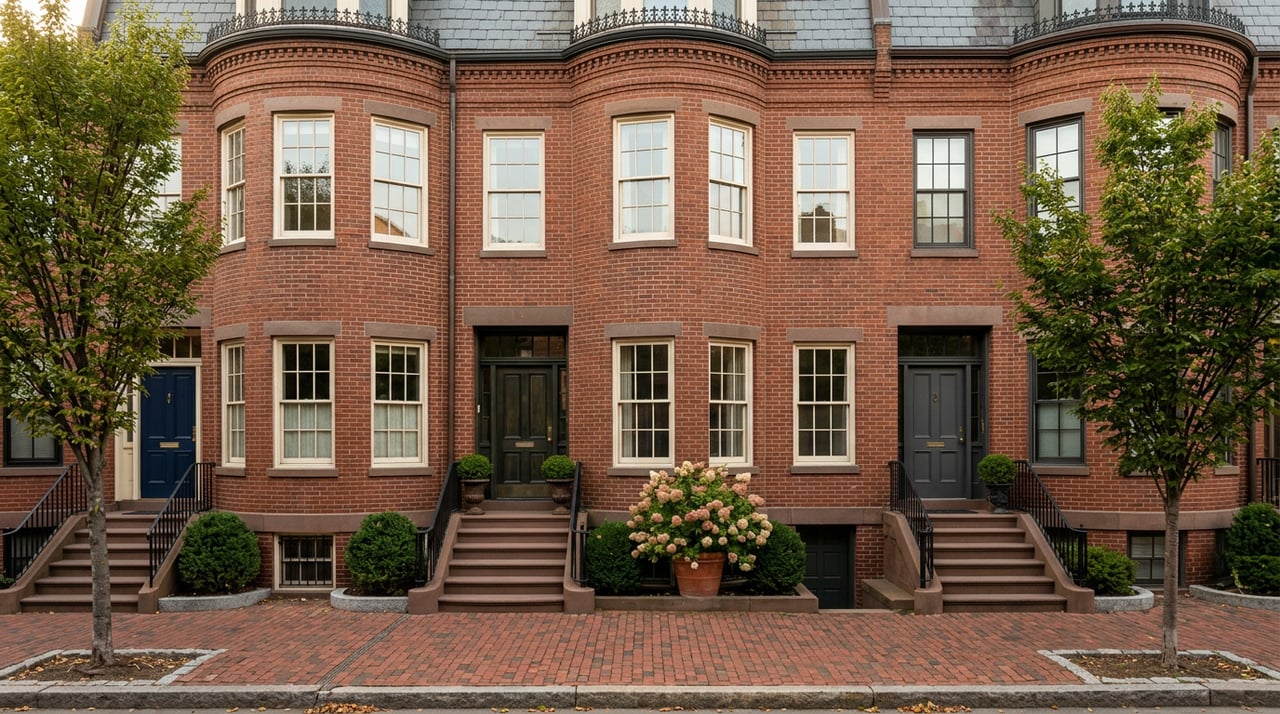
The real savings live in the older brownstone conversions, the kind of building stock that makes up most of the neighborhood's supply outside of Ink Block and SoWa. These units, often parlor-floor or garden-level layouts in rowhouses built well over a century ago, are the ones pulling the blended median down toward $1,112 to $1,200 a square foot. Buyers who want exposed brick, high ceilings, and a fireplace instead of a fitness center and a concierge desk are the ones actually capturing a meaningful gap versus Back Bay.
A rough guide to where South End inventory sits on that spectrum:
- Ink Block and SoWa full-service buildings, including Sepia, Siena, The Quinn, and Atelier 505, priced closer to Back Bay's benchmark, with amenities like garage parking, concierge service, and roof decks built into the fee structure
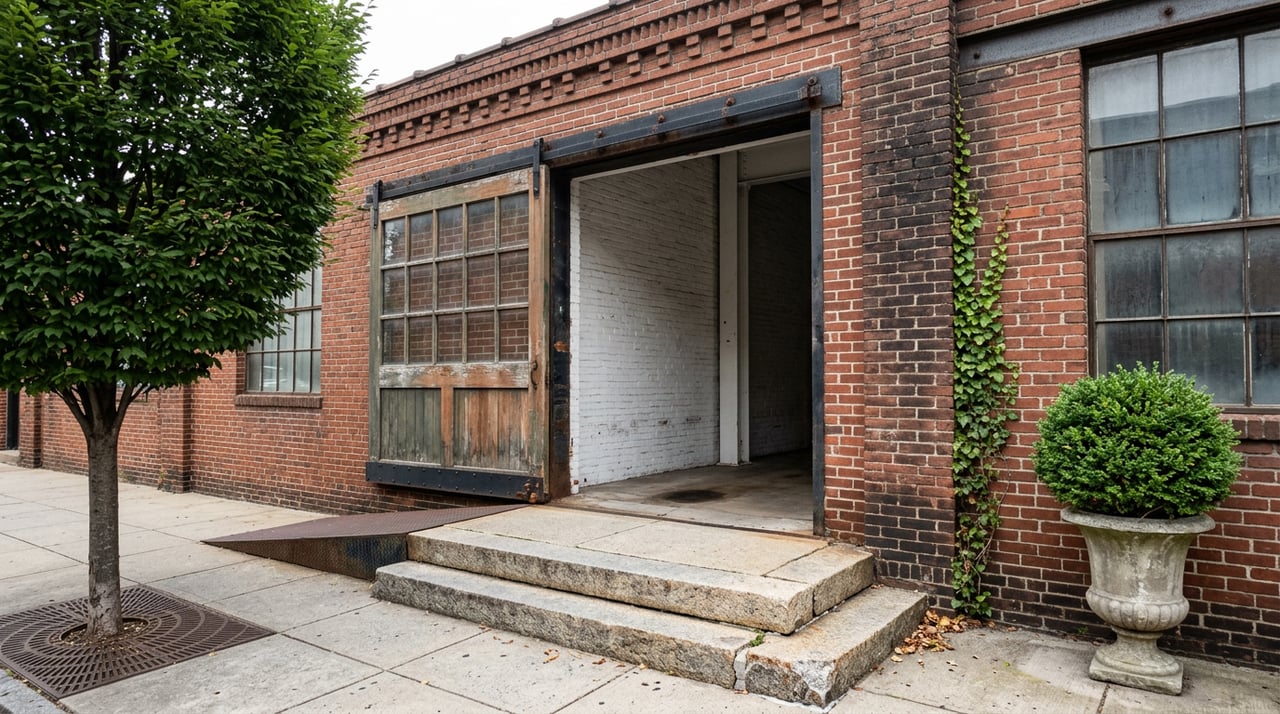
- Boutique loft conversions such as 100 Shawmut, Wilkes Passage, and the Laconia Lofts, priced between the two extremes, trading on character and location rather than full-service amenities
- Classic brownstone rowhouse conversions on streets like Concord Square, where well-renovated two-bedroom units have reportedly gone under agreement in fewer than 14 days when priced to recent comps
- Trophy single-family brownstones on Union Park and similar blocks, which operate closer to a private-sale market than a comparable-based one
Inventory dynamics reinforce the split. South End listings climbed roughly 39 percent year over year as of a late July 2026 snapshot, giving buyers real negotiating leverage on the broader condo stock for the first time in years, even as well-priced brownstones on prime blocks still moved quickly at 97 to 98 percent of list price. Back Bay hasn't seen anything close to that inventory growth, which is exactly why its scarcity premium has held.
So Which Number Should You Use?
If you're comparing South End to Back Bay on price alone, the honest answer is that you're asking a question the data can't answer until you specify what you're buying. A full-service, amenity-rich unit in either neighborhood will land in roughly the same per-square-foot range. A character brownstone conversion in the South End will genuinely cost less per square foot than comparable Back Bay stock, largely because Back Bay has very few of that kind of unit left to sell.
The practical move is to stop treating "South End" and "Back Bay" as two rows in a spreadsheet and start treating "new full-service condo" and "historic rowhouse conversion" as the real categories, then ask which neighborhood offers more of what you want in that category. For move-up buyers weighing walkability and lifestyle fit as much as price, that reframing usually clarifies the decision faster than another round of portal browsing.
Frequently Asked Questions
Is the South End actually cheaper than Back Bay? For brownstone-style condos, generally yes, per square foot. For new full-service buildings with concierge and garage amenities, the gap narrows enough that it may not be the deciding factor.
Why did a South End brownstone sell for more than almost anything in Back Bay? Union Park is a private, park-fronted block with only 46 properties and limited garage access on one side. Sales there reflect scarcity within a single street, not the broader South End condo market.
Does rising inventory in the South End mean prices are falling? Not uniformly. Overall inventory grew meaningfully in 2026, giving buyers more leverage on typical listings, but well-priced brownstones on strong blocks have continued to sell close to full asking price.
If you're weighing a full-service condo against a historic conversion, or trying to figure out what a specific block or building is really worth before you write an offer, The Robinette Team can walk you through the comparable sales that actually apply to your search. Request a Private Valuation to start with numbers built around the property you're considering, not a neighborhood average.