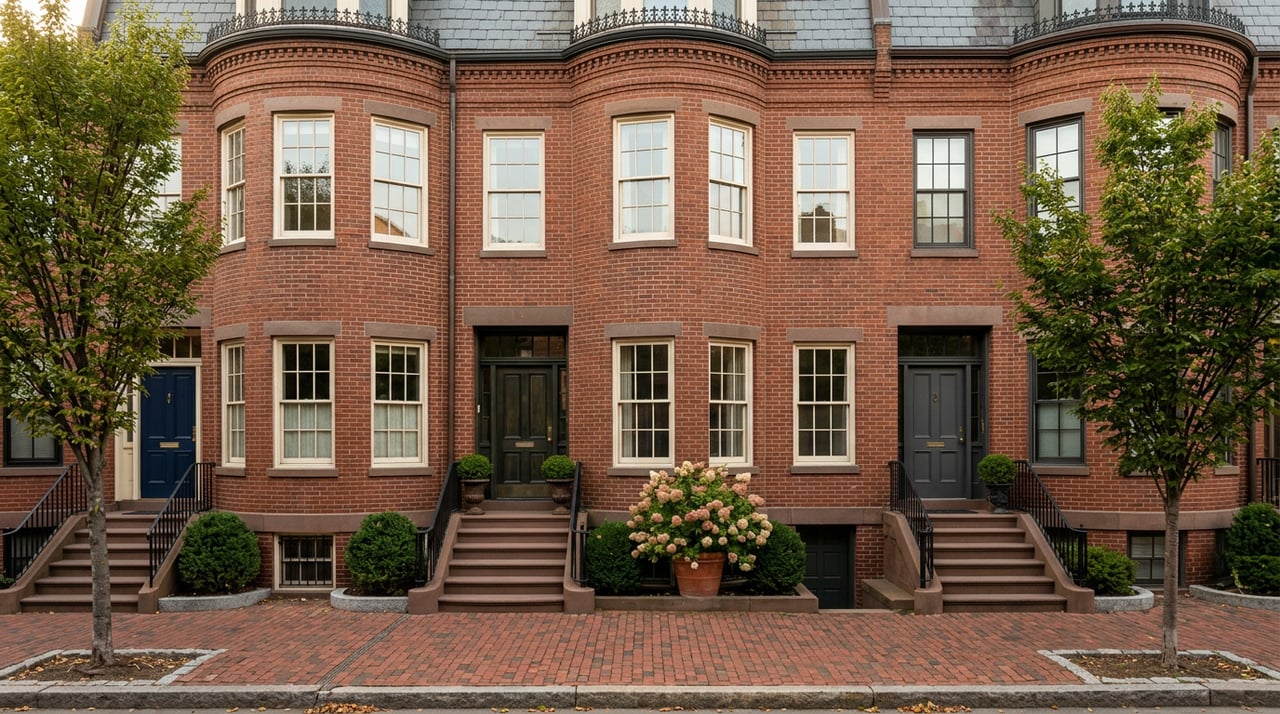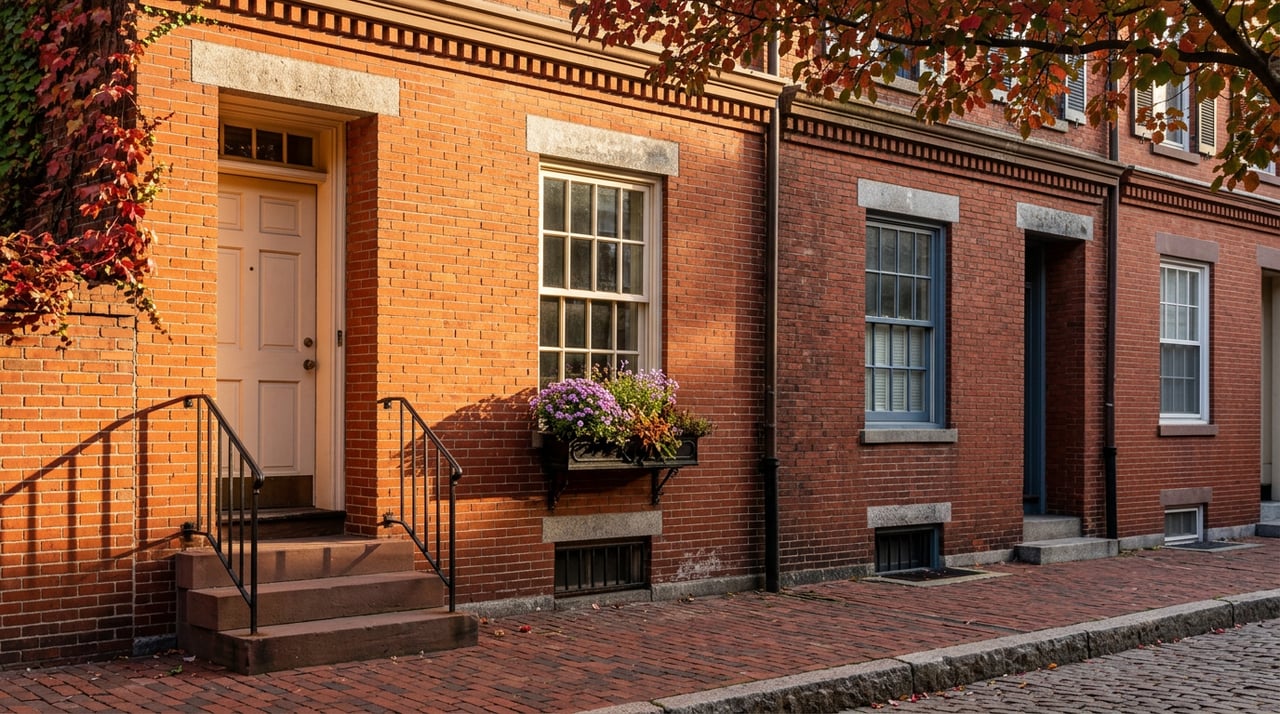
Walk down Mt. Vernon Street on the last Sunday of September and you will find it closed to cars, filled with a dog parade, a band setting up near Louisburg Square, and neighbors who seem to have known about this for months. If you just moved in, it looks spontaneous, like the street decided on its own to become a block party. It didn't. A nonprofit with an office at 74 Joy Street planned it, permitted it, and has been running some version of it for decades.
That's the thing about Beacon Hill in the fall. The pumpkins on the stoops, the garlands on every lamppost by December, the car-free hours on Halloween night: none of it happens because the neighborhood is simply that picturesque. It happens because the Beacon Hill Civic Association builds it, funds it, and staffs it, year after year, and most of the people enjoying it have no idea the machinery exists.
The Sunday Mt. Vernon Street Fills With Music
This year's Fall HillFest is set for Sunday, September 27, with a companion event, Dinner Under the Stars, the night before on Saturday the 26th. Both are BHCA productions, part of a calendar that also includes an Evening at 74, a rooftop gathering called the Party in the Sky, and the Founders Reception, all run by the same events committee out of the same Joy Street office.
None of this is incidental scheduling. The BHCA holds a Meet and Greet the first Monday of every month at 75 Chestnut Street and a First Friday Coffee Hour at 74 Joy Street from September through June, which means the organization is in continuous contact with residents almost year-round, not just during the big public moments. HillFest is the visible tip of an association that operates more like a small civic government than a social club.
Who Actually Closes the Streets on Halloween
If you've lived here for a Halloween or two, you already know the neighborhood goes car-free for a few hours. What you may not know is how specific and repeatable the closure list is. In a recent year, the BHCA worked with the city and local police to barricade Mt. Vernon Street at both Charles and Joy, along with sections of Louisburg Square, West Cedar Street, and Cedar Lane Way, while Chestnut Street needed no barricade at all because access was already blocked from the Mt. Vernon side. The pattern goes back at least a decade: an almost identical list of streets, Chestnut, Spruce, Walnut, Willow, Louisburg Square, and sections of West Cedar, was published by the same association more than ten years earlier.
That kind of consistency isn't luck. It's a logistics plan that gets reused and refined every year, coordinated with the city's transportation department and the police, and executed in part by volunteers. The BHCA has asked residents living near the barricade points to physically move them into place before trick-or-treating starts and pull them back afterward, with the police collecting them a day or two later. The safe, pedestrian-only Halloween that draws families to Louisburg Square from across the city is, in a very literal sense, assembled by hand each year by the people who live there.
The Garlands Didn't Get There by Themselves
By early December, every lamppost on the Hill is wrapped in laurel garland and a red bow, roughly 1,100 of them. That image is probably the single most recognizable piece of Beacon Hill iconography, and it exists because of a specific fundraising tradition called Garlands and Greens.
The tradition traces back to Tom Kershaw, who is credited as the person who started dressing Charles Street's gas lampposts for the holidays through the Beacon Hill Business Association, and who later helped extend the practice to the residential streets when the Beacon Hill Civic Association joined in 1998. Kershaw's contribution wasn't just the idea. He hosted an annual cocktail party, paying for the food and drink himself, with proceeds going directly to cover the cost of the decorations. The event happens at the Hampshire House on Beacon Street, and the money raised goes toward buying the yardage of garland and the bows needed to dress every post on the Hill, a cost that has run close to $12,000 in past years. The actual physical decorating happens over a designated weekend in early December, when a crew of volunteers and BHCA staff cover the neighborhood block by block.
The lamppost garlands that make Beacon Hill look like it stepped out of a holiday postcard are the output of a specific annual transaction: a party, a fundraising goal, and two days of volunteer labor. Nobody photographing Chestnut Street in December sees any of that. They just see the garland.
Two New Kitchens Bookend the Season on Charles Street
The same stretch of Charles Street that anchors most of this civic activity also picked up two new dining rooms this year, and the timing matters if you're mapping out where to eat before or after HillFest.
Willie's opened in March at 20 Charles Street, next door to sister restaurant ZURiTO, from BCB3 Hospitality, the group behind chef Jamie Bissonnette's other Boston projects. It's a small, 28-seat room built around a Wood Stone oven, serving thin-crust pizza alongside pasta dishes that borrow from Japanese, Korean, and Basque cooking, not the straightforward red-sauce spot the name might suggest.
A few blocks away, the address at 149 Charles Street, long known as the no-frills Beacon Hill Pub, has sat closed since the pandemic after roughly 50 years as one of the neighborhood's most recognizable barrooms. Veteran Boston restaurateur Patrick Lyons is set to reopen the space this fall as Harry Hare's, a British-inspired alehouse with a menu developed by chef Bill Poirier, previously the executive chef at Sonsie on Newbury Street. Lyons described the old space bluntly at a recent licensing board meeting, calling it "a bucket of blood" for most of its history and framing the new pub as a deliberate reversal of that reputation.
Between Willie's already-open kitchen and Harry Hare's fall debut, Charles Street is adding two new reasons to linger on the same block where the BHCA runs its street closures and its garland fundraiser, which means the fall calendar and the dining scene are converging on the same few hundred feet of sidewalk this year.
What This Means If You Live Here
The takeaway isn't that Beacon Hill is charming, you already knew that. It's that the charm has an org chart. A civic association with a staffed office, a recurring meeting schedule, and a formal relationship with city transportation and police departments is the reason the neighborhood functions the way it does every September through December. HillFest doesn't happen because Mt. Vernon Street is pretty. It happens because someone booked the permit.
If you've been meaning to get more involved rather than just benefiting from the results, the entry points are low-key and recurring: the Meet and Greet on the first Monday of the month, the First Friday Coffee Hour, or simply showing up to HillFest on September 27 and asking someone at the registration table how the barricade volunteer list works. The neighborhood's fall traditions are maintained by residents who decided to show up more than once. There's room for more of them.
If you're a homeowner here and curious what any of this civic texture, the events, the garlands, the new restaurants, means for the value and character of your specific block, The Robinette Team knows Beacon Hill at the level of which side of Mt. Vernon gets the barricade and why. Reach out for a private conversation about your property whenever the timing is right.